Top Designers Say the "Kitchen Work Triangle" Is Out for 2026—Here's the Layout That's Replacing It
For decades, the "kitchen work triangle"—the classic relationship between the refrigerator, sink, and stove—has been the undisputed king of kitchen design. It promised efficiency, flow, and ergonomics, becoming the foundational rule in nearly every kitchen renovation.
But as our lives, homes, and technology evolve, designers are declaring its reign over for 2026. The shift isn't just a trend; it's a fundamental reimagining of how we use our kitchens.
The Problem with the Perfect Triangle
The work triangle originated in the 1940s, a time when single cooks were performing distinct, sequential tasks: retrieve food from the fridge, wash it at the sink, cook it on the stove. This model made perfect sense for a solo chef in a more compartmentalized home.
However, today's kitchens are vastly different:
- Multiple Cooks: Families, friends, and partners often share cooking duties.
- Open Concept Living: Kitchens are now integrated into living spaces, becoming hubs for entertaining, homework, and remote work.
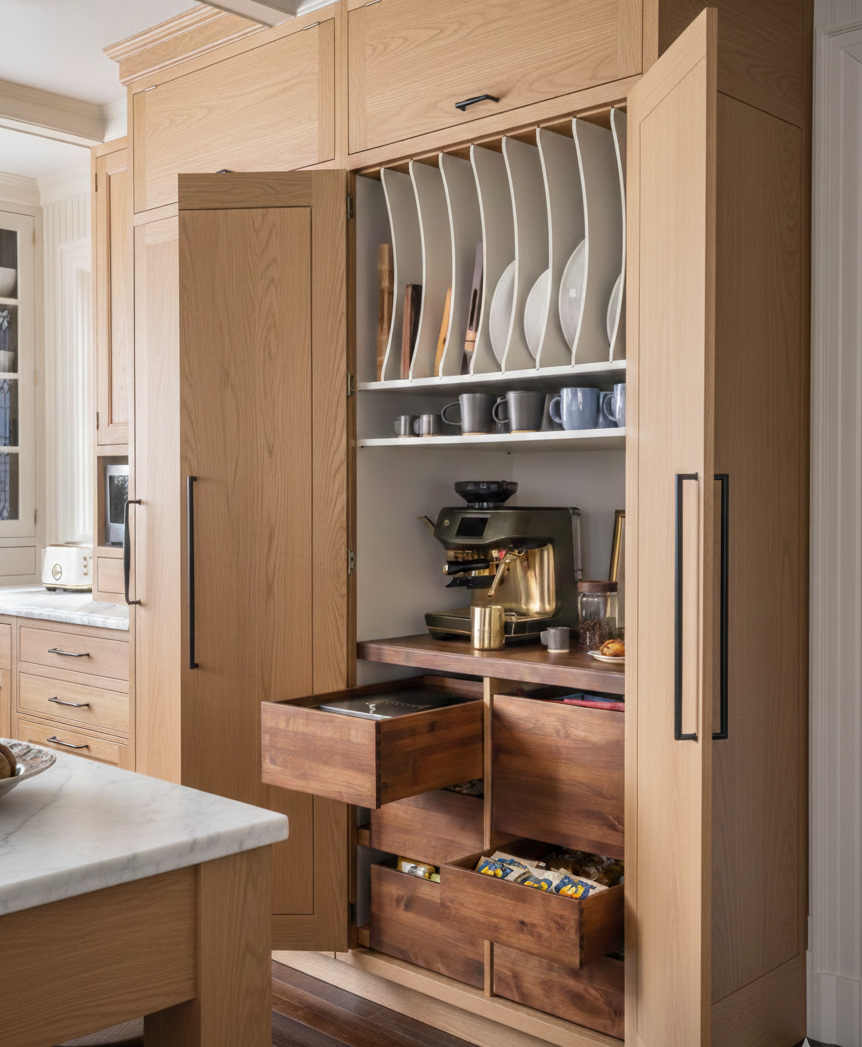
- Appliance Proliferation: We have dedicated coffee stations, beverage centers, smart ovens, warming drawers, and specialized prep sinks.
- Specialized Tasks: Cooking is no longer a linear process but a series of overlapping, concurrent activities.
The rigid triangle often creates bottlenecks, forces people to cross paths, and doesn't account for modern appliances or multi-tasking.
Introducing the "Kitchen Work Zones" Layout
The new paradigm for 2026 is the "Kitchen Work Zones" layout. Instead of a single triangle, designers are creating distinct, purpose-built areas within the kitchen. Each zone is designed for a specific activity and equipped with the tools and appliances needed for that task.
Here are the primary zones you'll find in a modern kitchen:
1. The Prep Zone
This is where the magic starts. It features ample counter space, often a dedicated prep sink, cutting boards, knives, and easy access to small appliances like food processors. It's ideally located near the refrigerator for quick ingredient retrieval.
2. The Cooking Zone
Naturally, this zone centers around the range, cooktop, and oven(s). It includes pots and pans storage, spices, cooking utensils, and often a built-in pot filler at the stove. Good ventilation is key here.
3. The Cleaning Zone
This zone focuses on the main sink, dishwasher, trash/recycling pull-outs, and storage for cleaning supplies. It's often positioned to allow easy clearing of the dining area or island.
4. The Pantry/Storage Zone
This includes the main refrigerator, freezer, and dedicated pantry space for dry goods, oils, and often smaller appliances that aren't used daily. Walk-in pantries are seeing a huge resurgence.
5. The Serving/Beverage Zone
Often separate from the main cooking action, this zone might feature a secondary sink, a wine fridge, coffee maker, barware, and glassware. It allows guests or non-cooks to grab a drink without entering the main cooking workflow.
The Benefits of Kitchen Work Zones
- Improved Flow: Multiple people can work simultaneously without getting in each other's way.
- Enhanced Efficiency: Everything you need for a specific task is right where you need it.
- Customization: Zones can be tailored to individual cooking styles and family needs.
- Better for Entertaining: Guests can easily access drinks or snacks without disrupting the chef.
- Adaptable to Technology: Easily integrates new smart appliances or dedicated spaces for gadgets.
Redefining Your Kitchen for 2026 and Beyond
If you're planning a kitchen remodel, forget the rigid triangle. Think about how you actually use your kitchen. Do you bake often? Entertain large groups? Have multiple family members cooking? By designing with distinct work zones in mind, you can create a kitchen that's not only beautiful but truly functional for modern living.