Paradise Valley occupies a singular position in the Arizona luxury market. With roughly 13,000 residents spread across some of the most valuable residential real estate in the Southwest, it's a community that demands — and rewards — a thoughtful approach to interior design.
Having designed homes across Paradise Valley for over 25 years, I've developed a deep understanding of what makes this market different from neighboring Scottsdale, and why those differences matter when you're planning a design project.
The Architecture Sets the Rules
Paradise Valley's residential architecture is remarkably diverse for such a small community. You'll find mid-century modern estates on Camelback Mountain, Santa Fe-inspired homes along the wash corridors, contemporary builds in Clearwater Hills, and Mediterranean villas near the base of Mummy Mountain. Each architectural style creates a different set of design parameters.
A designer working in Paradise Valley needs to read the architectural language of each home before proposing a single finish or furniture piece. The sweeping glass walls of a contemporary Camelback estate call for a completely different approach than the carved wood beams and thick plastered walls of a territorial-style home in the Estates at Paradise Reserve.
This isn't just about aesthetics. It's about understanding how materials interact with the specific orientation, light patterns, and thermal characteristics of each structure. A south-facing great room with floor-to-ceiling glass has fundamentally different fabric and flooring requirements than an enclosed study on the north side of the same home.
The Scale Factor
Paradise Valley homes tend to be substantial. The median home size is significantly larger than the national average, and many of the estates we work in range from 5,000 to 15,000 square feet. Designing at this scale requires a different skill set than working in standard residential spaces.
The most common mistake in large homes is under-scaled furniture. A standard 84-inch sofa that works beautifully in a 300-square-foot living room looks like it's floating in a 600-square-foot great room with 14-foot ceilings. Getting proportions right — in furniture, art, lighting fixtures, and rugs — is one of the most critical aspects of designing for Paradise Valley homes.
Equally important is creating intimacy within large spaces. Nobody wants to feel like they're living in a hotel lobby. We use strategic furniture groupings, area rugs, lighting zones, and architectural elements like built-in seating and floating shelves to create rooms within rooms — intimate conversation areas, reading nooks, and cozy corners that make a 12,000-square-foot home feel like a place where you'd actually curl up with a book.
Indoor-Outdoor Living at the Highest Level
Every community in the Valley talks about indoor-outdoor living. In Paradise Valley, it's executed at a different level entirely. The homes here often feature outdoor living spaces that rival the interior in both investment and design sophistication — full outdoor kitchens, climate-controlled patios, fire features, water elements, and landscape lighting programs that transform the property after dark.
From an interior design perspective, this means thinking about sight lines, material transitions, and the visual relationship between inside and out with unusual care. When a client's great room opens onto a resort-quality pool and a Camelback Mountain view, the interior design needs to complement that backdrop without competing with it.
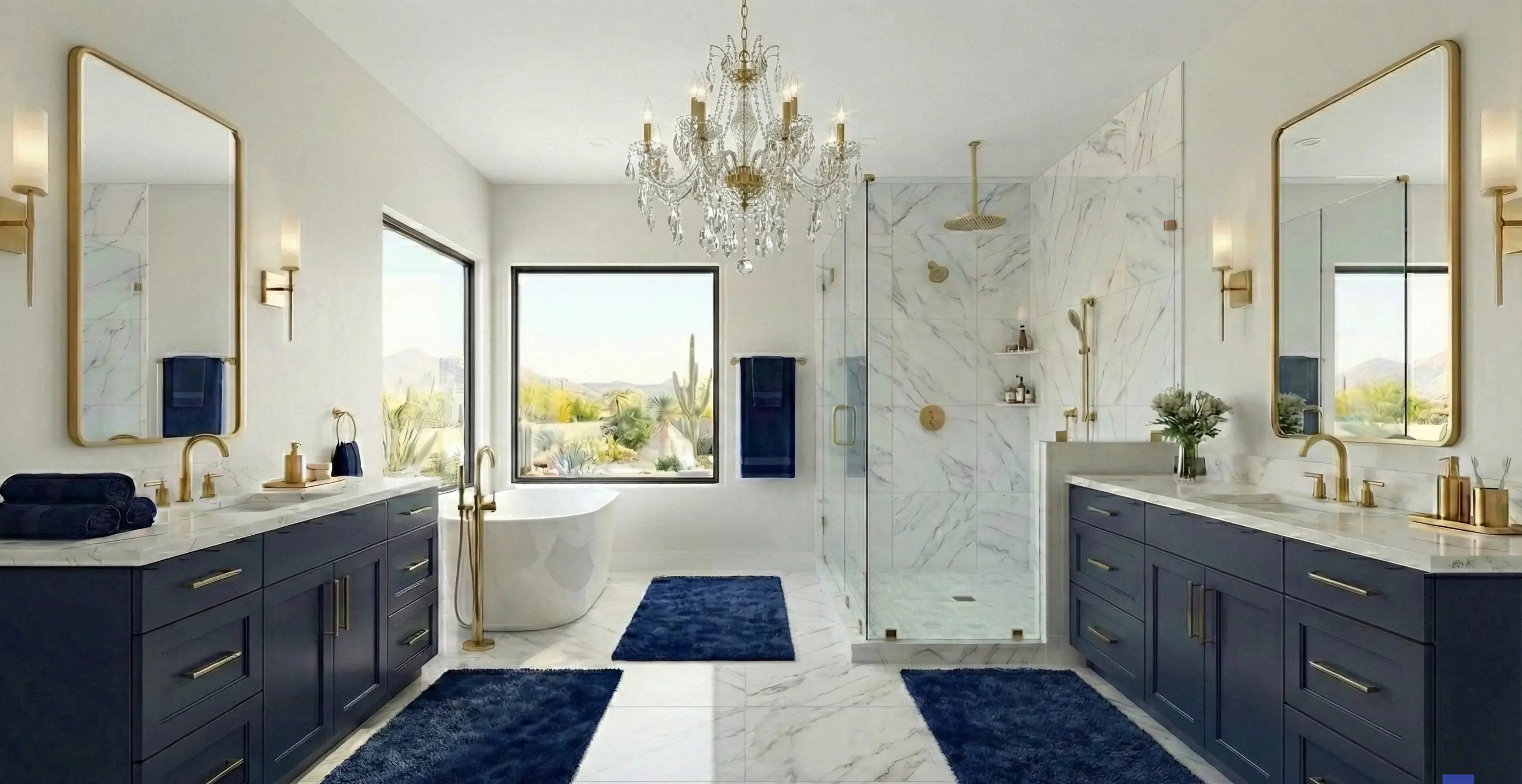
We often use a muted interior palette in these settings — warm neutrals, natural stones, and subtle textures — so the desert landscape becomes the artwork. The materials still need to be extraordinary up close, but they shouldn't fight the view for attention.
The Privacy Factor
Paradise Valley residents value their privacy, and this shapes the design process in ways that might not be obvious. Many clients prefer working with a designer who operates with discretion — who won't photograph their home for social media without permission, who can coordinate deliveries and installations without disrupting the neighborhood, and who understands that the design process itself should feel unhurried and private.
This extends to procurement. Paradise Valley clients often want access to pieces that aren't available in local showrooms — European artisan furniture, custom-commissioned artwork, antiques sourced from international dealers. The designer's role becomes part curator, part logistics coordinator, managing relationships with makers and shippers across multiple time zones while keeping the client informed without overwhelming them.
Working With Builders and Architects
In Paradise Valley, many projects involve collaboration with architects and custom home builders. The homes here are rarely spec builds — they're custom commissions where the interior designer ideally joins the team during the design development phase, not after construction is complete.
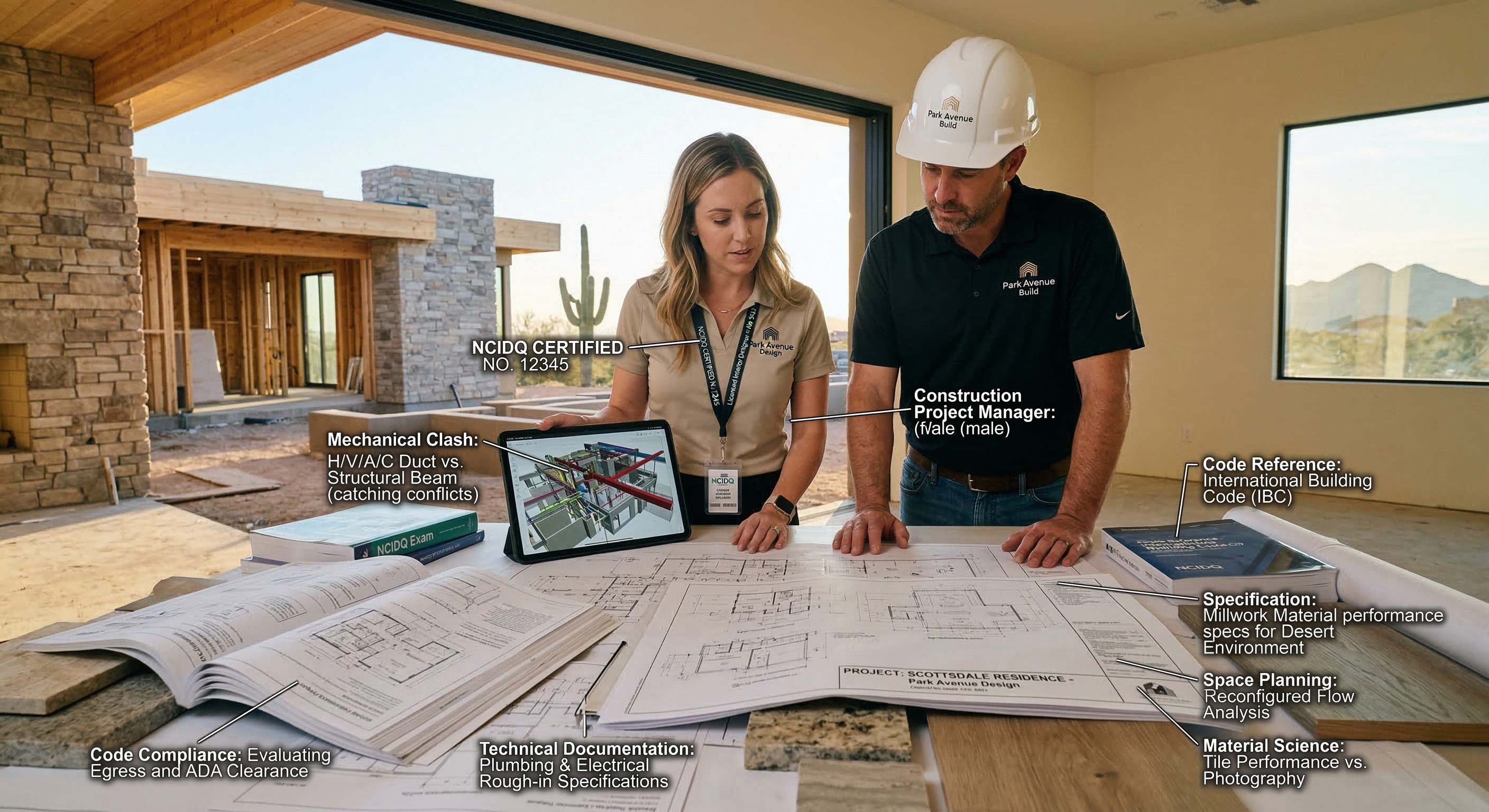
Early involvement matters because it allows us to influence decisions that are nearly impossible to change later: electrical placement for lighting plans, blocking in walls for heavy art or mounted TVs, plumbing rough-ins for wet bars and butler's pantries, and HVAC register locations that won't interfere with ceiling details.
If you're planning a new build or major renovation in Paradise Valley, bringing your interior designer into the conversation at the same time as your architect and builder isn't a luxury — it's a practical decision that prevents costly change orders and ensures the finished home is cohesive from the foundation up.
What to Expect from the Investment
Design fees in Paradise Valley reflect the complexity and scale of the projects. Full-service interior design for a large estate is a significant investment, but it's proportional to the value of the home and the scope of work involved.
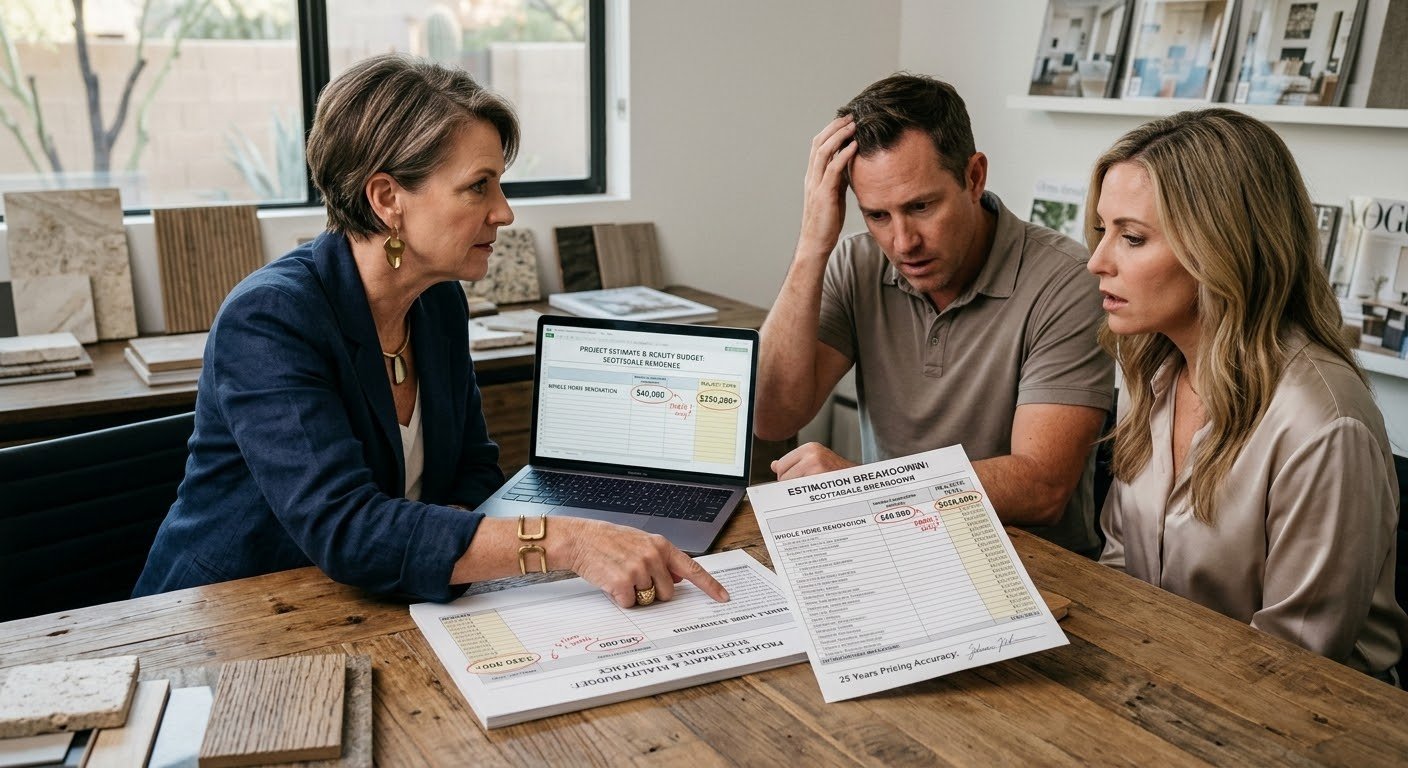
For context, a comprehensive design package for a 6,000-square-foot Paradise Valley home — including space planning, material selection, custom furnishings, procurement, project management, and installation — might range from $75,000 to $200,000 in design fees alone, with furnishing budgets that can range from $200,000 to well over $1 million depending on the client's vision.
Finding the Right Designer for Paradise Valley
The qualities that matter most in a Paradise Valley designer are experience at scale, a strong professional network, and the ability to listen before proposing. Credentials matter — NCIDQ certification and ASID membership demonstrate baseline competency — but in this market, you're also looking for someone who has navigated the specific challenges of large-scale luxury residential work and who understands the community.
At Park Avenue Design, we've been designing homes in Paradise Valley, Scottsdale, and the surrounding communities for over 25 years. Gabrielle Roeckelein holds both ASID and NCIDQ certifications and works directly with every client — no handoffs, no junior associates making design decisions on your behalf.
If you're considering a design project in Paradise Valley, we'd welcome the conversation. Our initial consultation is complimentary, and there's no obligation — just an honest discussion about your home, your vision, and whether we're the right fit.
Call (480) 961-7779 or visit parkavenuedesign.com/contact-us.
Gabrielle Roeckelein, ASID, NCIDQ — Park Avenue Design, Inc. | Scottsdale, Arizona