Introduction: The Endurance of Real-Life Design
In a world dominated by "scroll-stopping" viral trends and saturated filters, the pressure to go bold is everywhere. We are told that "loud" is the only way to get noticed. But in the reality of our daily lives—the spaces where we actually drink our coffee, raise our families, and decompress after a long day—loud is rarely lasting. Real-life design isn't about the grand reveal; it’s about the quiet, persistent comfort that remains after the novelty wears off. It’s the difference between a design that demands your attention and one that simply supports your life.
What Is Subtle Design in a Real Home?
Subtle design isn't about an empty room or a lack of personality. It is about intention, nuance, and restraint. It’s the philosophy that a home should feel like a deep breath. In a real-life setting, this looks like:
- Materials with Integrity: Choosing a solid wood table that gathers small scratches over years, telling the story of family dinners rather than showing wear as "damage."
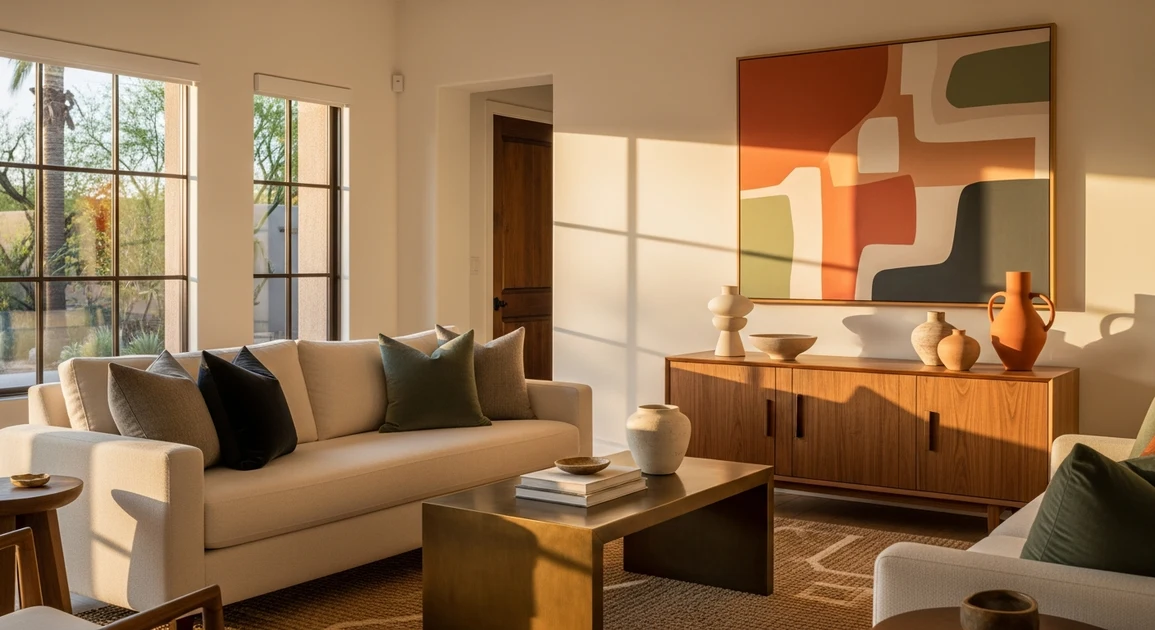
- Living Color: Using wall tones that aren't just "beige," but a complex hue that warms up as the afternoon sun hits it and cools down in the evening.
- Tactile Layers: A wool rug against a smooth leather sofa—interest created through touch rather than a jarring pattern.
- Invisible Function: A kitchen where the trash bin is exactly where you’d reach for it, or a light switch positioned perfectly for a sleepy hand.
Why Subtlety Wins in the Long Run
Why do we eventually tire of the "loud" accent walls and neon trends, but never tire of a well-lit, balanced room?
- It Builds Psychological Trust: When a space is intuitive and uncluttered, our brains stop scanning for "problems" and start relaxing. You feel safe in a space that doesn't feel chaotic.
- It Outlasts the "Trend Cycle": High-contrast, trendy designs often have an expiration date. Subtle design is timeless; it adapts as your style evolves, serving as a sophisticated canvas rather than a rigid box.
- It Encourages Presence: By not overwhelming the senses, subtle design leaves room for the people in the room to be the focus. It invites conversation and reflection rather than just observation.
The Emotional Intelligence of Your Space
Every room in your house is communicating with you. Subtle design communicates with empathy, acknowledging how you actually move and feel throughout the day.
- In the Entryway: A simple, solid bench and a soft light don't just hold your shoes; they signal to your brain that "the workday is over."
- In the Living Room: A tan leather sectional and a textured rug create a grounded, "heavy" feel that physically encourages you to sit longer and rest.
- In the Bedroom: Tone-on-tone linens reduce visual noise, helping the mind quiet down for sleep.
Subtlety is sensory. It’s the weight of a door, the sound of a footstep on wood, and the glow of a lamp. You might not be able to name why you love being home—you just feel it.
How to Bring Subtlety Into Your Reality
You don't need a total renovation to apply these principles. Start with the "why" before the "what."
- Edit Your View: Walk through your home and identify "visual friction"—clutter or colors that make you feel slightly tense. Remove them.
- Prioritize Texture: If a room feels "flat," don't add a bright color. Add a textured throw, a stone bowl, or a wooden tray.
- Master the Light: Swap bright white bulbs for warm ones, and use lamps instead of harsh overheads.
- Observe Your Response: Pay attention to which corner of your house you naturally gravitate toward. What is the light doing there? What is the texture? Replicate that quiet success elsewhere.
Conclusion: The Power of Quiet Confidence
Subtle design doesn’t beg for a "like" on social media—it earns its keep through years of daily use. In a world that’s getting louder and faster, a home designed with subtlety offers a rare gift: a sanctuary of calm and clarity. There is a profound power in a space that doesn't try to be everything at once, but instead chooses to be exactly what you need.